
There’s a myth that quietly costs African researchers millions: that global research funding is built for Oxford and Harvard, not Ibadan or Nairobi or Accra.
It’s wrong. And believing it is the most expensive mistake in African academic research.
Here’s the real map, as it stands today.
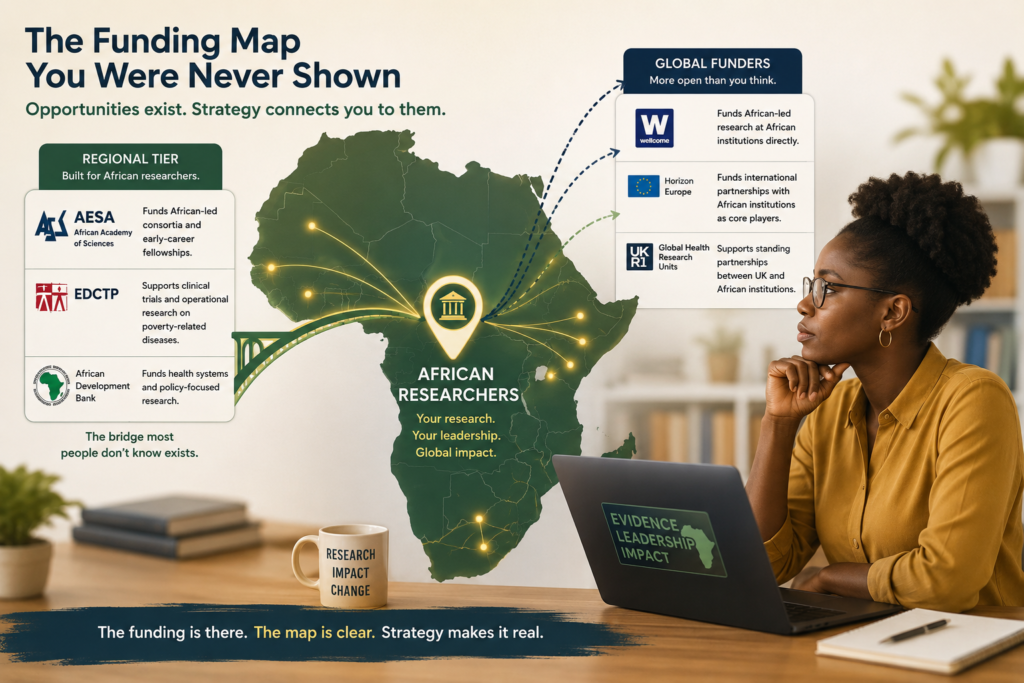
Don't Skip the Regional Tier
This is the most overlooked layer in African research funding, and it’s built specifically for you.
- The African Academy of Sciences (AESA), including Grand Challenges Africa and DELTAS Africa, funds African-led consortia and early-career fellowships. No structural disadvantage here; this tier exists for African researchers.
- EDCTP funds clinical trials and operational research on poverty-related diseases, and is explicitly designed to put African investigators in the PI seat, not just on the site list.
- The African Development Bank funds health systems and policy-focused research, especially implementation science.
This tier is the bridge most people don’t know exists.
Global Funders Are More Open Than You Think
Skip the assumption that “global” means “gatekept.” Several major funders have made African research a deliberate priority:
- Wellcome Trust funds African-led research at African institutions directly, through fellowships and dedicated institutional initiatives, not as an afterthought.
- EU Horizon Europe funds international partnerships that include African institutions as core players.
- UKRI’s Global Health Research Units fund standing thematic partnerships between UK universities and African institutions. If you have a UK link, this infrastructure may already be in place.
These aren’t long-shot applications. They’re funders that have written African leadership into their mandate.
Stop Thinking in Tiers
Here’s the trap: treating these as a prestige ladder, applying to the “biggest” name regardless of fit. The funders that actually fund you are the ones whose priorities match your research question, your career stage, and the evidence you can already bring to the table, not the ones with the most recognizable logo.
Which mechanism is right for which disease area, career stage, and institution profile is exactly the kind of question that doesn’t have a one-size-fits-all answer, and it’s where most funding strategies go wrong.
The Habit That Actually Wins Grants
Funding success isn’t a talent. It’s a weekly habit.
- Read the full RFA, not the summary.
- Set alerts for calls in your area.
- Work your specific aims and preliminary data every week, not the week before deadline.
- Circulate drafts. Feedback before submission predicts success more than any single line in your CV.
And rejection isn’t a verdict: most funded proposals were rejected at least once. Reviewer comments are free expert consultation. Use them.
Adeeni Research Solutions helps health researchers at African academic institutions turn this map into a funding strategy matched to their research, career stage, and institution.